A team can finish a sprint and close many tasks while making little difference for the user. Backlog management needs to connect activity to outcomes.
Separate activity from impact
Completed tasks show what was done. A user completing their job more easily is an outcome. A new dashboard is a solution; helping a business owner understand today’s bookings is the reason for that solution.
Make the reason visible
For each important item, explain who it serves, which problem it changes and how you will check the result. User stories help express the need. Acceptance criteria clarify the boundaries. Vague requirements need a concrete scenario and a testable expectation.
Prioritization is a decision
Not every stakeholder request can come first. Consider alignment with the product goal, customer impact, quality of evidence, dependencies, risk and effort. A scoring framework can organize thinking, but weak inputs do not become strong evidence because they have a number.
- Connection to the current product goal.
- Importance of the problem to the customer.
- Strength of the available evidence.
- Dependencies and technical risk.
- Distance to learning and a useful outcome.
Use a clear sprint goal
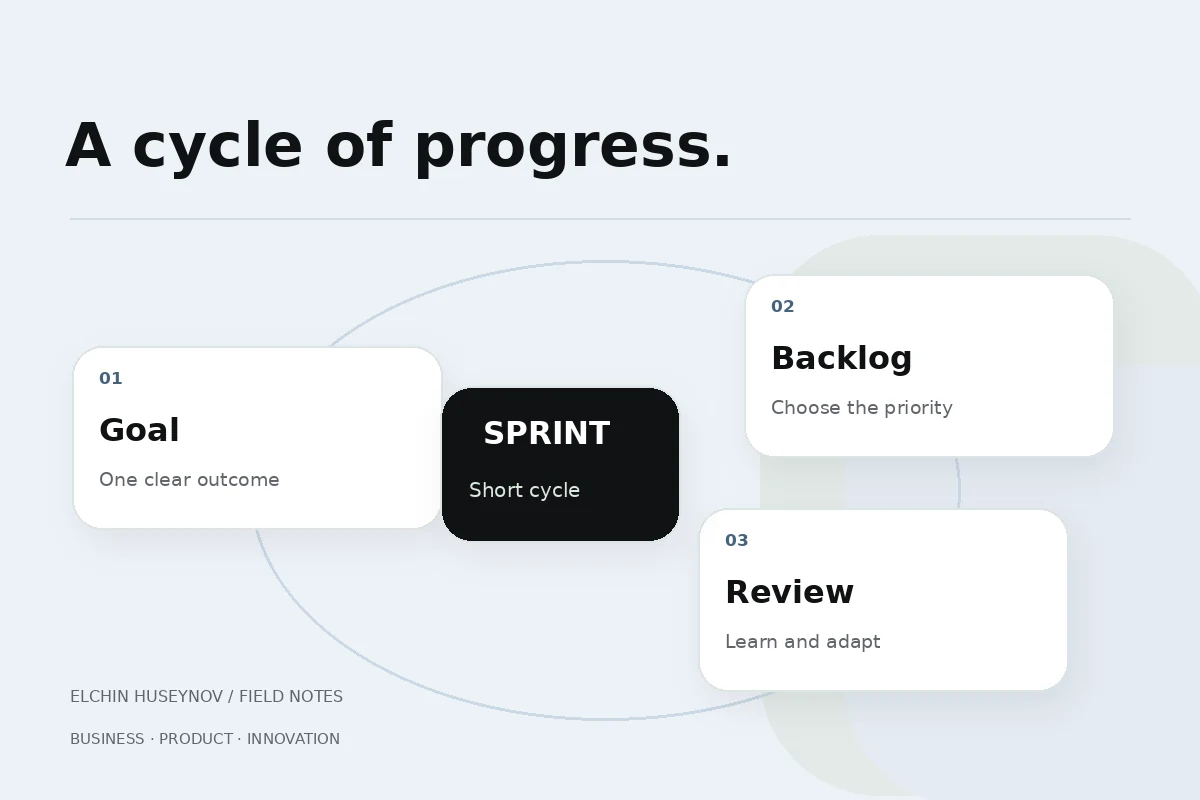
A sprint goal connects individual tasks. The product owner clarifies value and the team contributes an implementation approach and realistic capacity. Planning becomes collaboration, rather than the transfer of a list.
Make the review a learning conversation
Demonstrate the solution, then ask whether it moves you closer to the goal. What did you learn? Which assumptions changed? What should change in the next priority? New requests should be examined against the goal rather than automatically moved to the top.
Try a practical exercise
Choose five backlog items. For each, ask which user or business problem remains if the item is not done. If the answer is unclear, revisit the reason. Group the items by product goal and identify the smallest complete change.
A better backlog is not a longer list. It is clearer choices.
Join my product ownership and Agile training below to work through these ideas with practical exercises.
Questions and answers
Who prioritizes the backlog?+
The product owner is accountable for prioritization, informed by customers, stakeholders and the team.
Does task count show product success?+
Task count measures activity. User and business outcomes need separate measures aligned with the product goal.
Join the Agile training
Let’s find the right next step for your business, product or team.
Join the Agile training